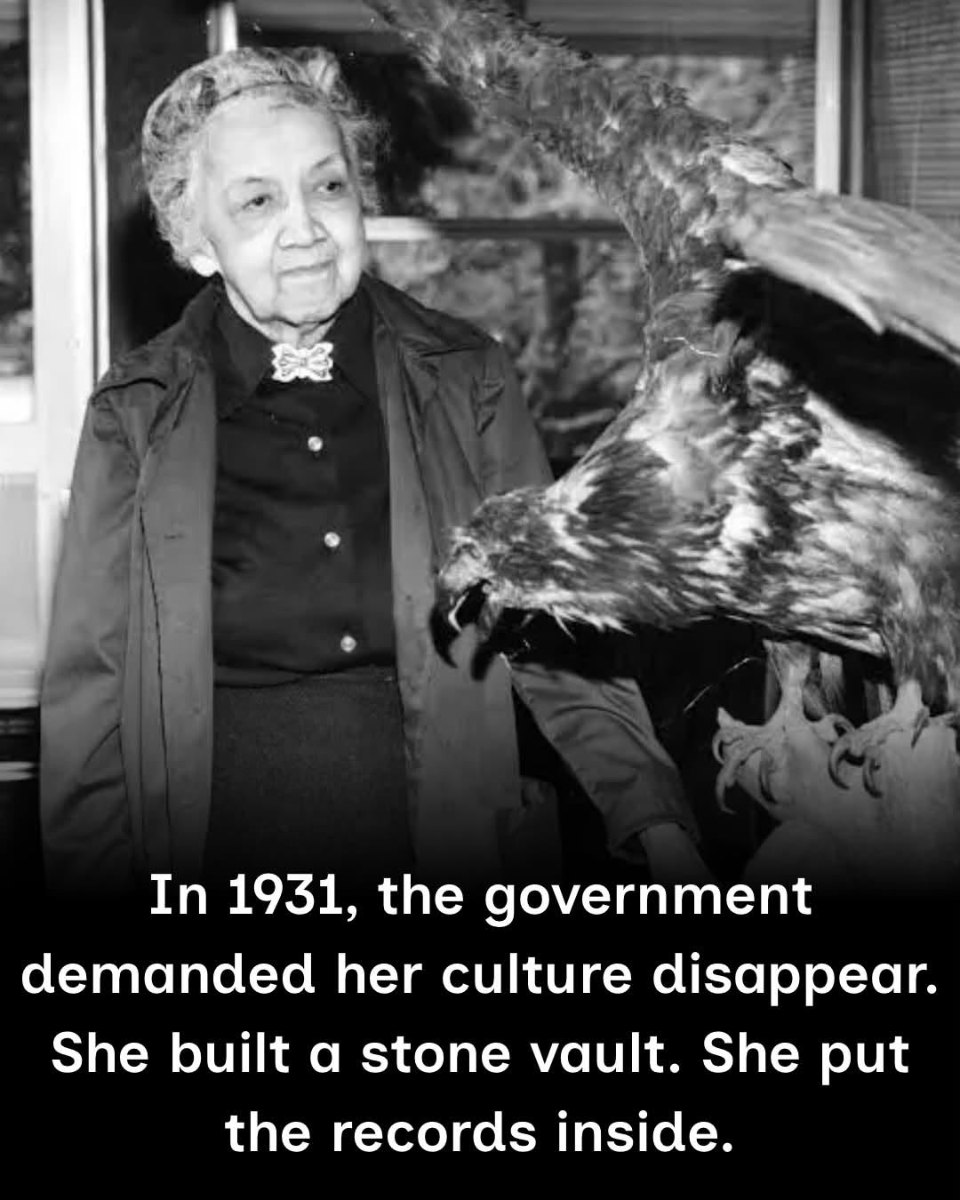
In 1931, federal agents wanted Native American medicine woman history erased. Gladys Tantaquidgeon built a stone room instead.
When a tribe seeks federal recognition today, the process takes decades. It requires teams of lawyers in Washington. It costs millions of dollars in legal fees. The government demands unbroken proof of existence.
Most groups cannot provide it. The paper trail usually breaks.
The Mohegan Tribe did not need a team of lawyers to prove they existed. They had Gladys Tantaquidgeon.
She was born in Uncasville, Connecticut, in 1899. That year, the government was actively removing Indigenous children from their homes. They sent them to boarding schools in Pennsylvania and Virginia, modeled after the Carlisle Indian Industrial School.
The explicit federal goal was to scrub the culture out of them. The administrators cut their hair. They forced them into military uniforms. Speaking the old language was punished with physical beatings. Knowing the old medicines was a crime.
The older women of the tribe, known as the nanus, chose Gladys to hold the memory. Fidelia Fielding, the last fluent speaker of the Mohegan language, took the young girl into the woods. She taught her the root systems. She taught her the planting cycles. She passed down the words.
Gladys learned the old ways. She realized that oral tradition could not survive the modern bureaucracy. The government was deleting her people on paper. She decided to fight them on paper.
In 1919, she left Uncasville and traveled to the University of Pennsylvania. She did not go to assimilate. She went to study anthropology under Frank Speck. She was an Indigenous woman walking into an Ivy League institution during an era when her people were not even considered full United States citizens.
She wanted to learn how the academics categorized, filed, and preserved data. She studied their cataloging methods. She learned their archiving systems. She knew the federal agents only respected what they could catalog. She weaponized their own administrative tools.
At the time, the Bureau of Indian Affairs operated under a strict assimilation mandate. Records from the 1930s show the official federal policy was designed to dismantle tribal land ownership and systematically suppress Indigenous practices. A Native American medicine woman was considered an obstacle to progress. Cultural preservation was a direct violation of federal intent.
In 1931, Gladys returned to Mohegan Hill. She, her father John, and her brother Harry began gathering local granite stones. They carried them up the hill by hand. They mixed the mortar themselves. They built a sturdy, one-room structure designed to withstand the New England winters.
They called it the Tantaquidgeon Indian Museum. The sign faced the road, but the building was not designed as a tourist attraction. It was a vault.
They placed the woven baskets inside. They filed the botanical records. They hid Fidelia Fielding's language notes in the drawers. They cataloged the birth and death dates of every Mohegan family.
Then Gladys did something uncomfortable. In 1934, she took a job with the Bureau of Indian Affairs.
Some people did not understand it. She was accepting a federal paycheck from the exact agency tasked with dismantling her culture. She wore a government badge.
She used their travel budget to go west. She took assignments as a community worker.
The 1930s were a desperate time for the tribes out west. The Great Depression wiped out whatever small resources they had left. The government rations were thin. The boarding schools were still operating. Gladys walked into this poverty with a notebook. She told the elders their knowledge was worth saving.
She visited the Yankton Sioux in South Dakota. She sat with the tribes in Montana. The train rides between reservations took days. The federal agents in Washington thought she was promoting government programs. They thought she was distributing federal aid and teaching assimilation curriculum.
She was actually helping the western tribes write down their own medicine practices before the older generation died. She recorded their folklore. She documented their agricultural techniques. She spent hours in federal offices filing the paperwork. She used government ink to record the exact knowledge the government wanted gone.
In 1942, while drawing her federal salary, she published a comprehensive study on Delaware Indian practices. She documented over eighty botanical remedies. She recorded the exact preparation methods for roots and barks. If she had not written them down, the formulas would have died with the elders.
She returned to Connecticut full time in 1947. She worked in the stone room on Route 32.
The local newspapers rarely mentioned her. State officials in Hartford assumed the Mohegan culture was completely extinguished. The state built highways through the area. They assumed nobody was left to object.
The official census records routinely classified Native residents as white or Black, wiping out their legal existence. Entire families were legally erased with a single stroke of a census taker's pen.
Gladys kept writing. She preserved the farming methods. She mapped the sustainable root harvests. She saved the marriage certificates. She updated the tribal rolls every single year. She documented birth lines, family trees, and land boundaries.
She spent seventy years sitting in a stone room, quietly keeping a ledger of a people the world thought had vanished.
She did not fight the erasure with a weapon. She fought it with a filing cabinet.
In 1978, the government created a new process for federal recognition. It required tribes to meet seven mandatory criteria. They had to prove continuous historical existence. They had to prove continuous political authority. They had to trace their genealogy back to a historical base roll.
By 1994, the Mohegan Tribe entered the final stages of proving they still existed. The bureaucrats expected a few fragmented oral stories. They expected a paper trail full of holes. Most tribes spend millions trying to piece together fragments held in federal archives.
The Mohegan Tribe submitted boxes of continuous, unbroken records. They handed over the exact botanical charts, letters, and tribal rolls Gladys had protected in the stone room. They had a documented history that no federal lawyer could dismantle.
Federal recognition was granted.
The Tantaquidgeon Indian Museum is still standing on Route 32 in Uncasville. It is the oldest Native-owned museum in America.
Gladys died in 2005. She was 106 years old.
The stone room is quiet today. The filing cabinets are still full. The federal government uses her paperwork as the official standard for who belongs.
Gladys Tantaquidgeon: the woman who kept the records the government tried to erase.